
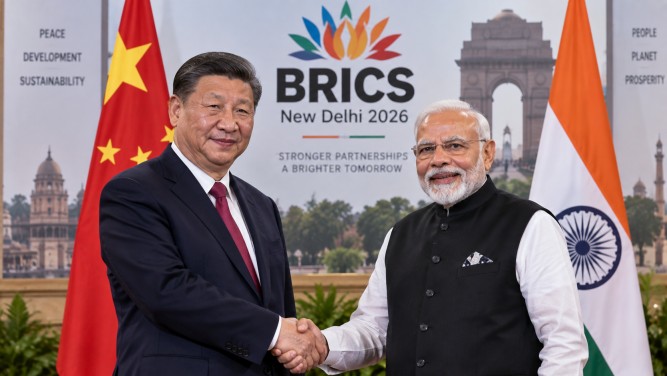
Chinese President Xi Jinping is set to visit India for the 18th BRICS Summit in New Delhi on September 12-13, marking his first trip to the country in nearly seven years. His anticipated meeting with Indian Prime Minister Narendra Modi is expected to garner significant attention, as both nations strive to stabilize their relationship following a period of heightened tensions.
The visit comes after years of strained relations due to the 2020 military standoff along the Line of Actual Control in eastern Ladakh, where a deadly clash in Galwan Valley resulted in the deaths of 20 Indian soldiers and at least four Chinese troops. The incident had severely impacted bilateral ties. However, relations began to thaw after India and China reached an agreement in October 2024 to disengage at Depsang and Demchok, leading to a meeting between Modi and Xi at the BRICS summit in Kazan to revive mechanisms for addressing the ongoing border dispute.
Since these efforts to mend relations, the two countries have resumed direct flights, reinstated the Kailash Mansarovar Yatra, and maintained diplomatic and military discussions aimed at ensuring peace along the contentious border. In August, an eight-point consensus was reached between India’s National Security Adviser Ajit Doval and Chinese Foreign Minister Wang Yi, which included establishing additional military meeting points, new hotline channels, and reopening three designated border trading points. This was followed by a corps commander-level meeting in the eastern sector on September 6.
India continues to emphasize that sustaining peace and tranquillity along the border is crucial for fully normalizing ties. Therefore, the discussions between Xi and Modi are likely to provide insights into the extent both sides are willing to advance the stabilization process while addressing the unresolved boundary issues. The BRICS summit will also see leaders discussing pressing global political and economic matters, including international conflicts, economic cooperation, and potential reforms to multilateral institutions.