
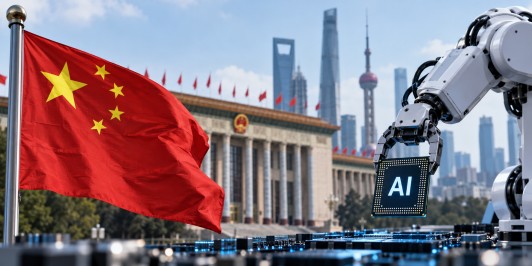
China has firmly dismissed international calls to limit its burgeoning artificial intelligence sector, characterizing such demands as driven by fear. The Chinese government has cautioned that efforts to constrain its AI development might jeopardize global collaboration on the technology. This strong stance comes in response to mounting apprehensions in the United States, where rapid advancements in Chinese AI capabilities are viewed as potential sources of security and geopolitical threats.
The Chinese Foreign Ministry has advocated for international cooperation in the development and governance of AI. It has warned that rivalry and confrontation could derail attempts to create global standards for this rapidly advancing technology. Despite refuting claims that its AI progress poses a fundamental threat, Chinese authorities have acknowledged their own concerns about the fast-paced evolution of powerful AI systems and have stressed the importance of keeping these technologies under human oversight.
Chinese security officials have raised alarms about the potential for AI to be employed in large-scale information and cyber operations, which could have significant implications for national and political security. Specifically, the authorities have highlighted the risks associated with the misuse of advanced AI models, underscoring the potential challenges they could pose to cybersecurity and information security.
This issue has become a focal point in the escalating tensions between China and the United States over dominance in the AI sector. Both nations are heavily investing in cutting-edge AI technologies while simultaneously implementing measures to safeguard national security and maintain their technological edge. This disagreement also mirrors a broader global discussion about the appropriate level of regulation for increasingly sophisticated AI systems. While some experts advocate for enhanced safeguards and international collaboration, there are warnings that excessive restrictions might stifle innovation and exacerbate geopolitical rifts.
As part of ongoing diplomatic engagements, leaders from the United States and China are anticipated to address AI governance and related technological concerns in an upcoming meeting later this month. Meanwhile, China’s state media has criticized suggestions to throttle AI development, arguing such measures may be perceived as part of a strategic attempt to curb China’s ascent in the global tech arena.