
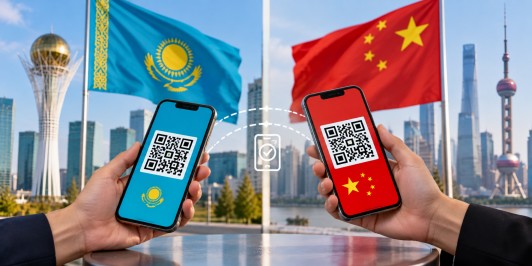
Kazakhstan is set to introduce cross-border QR-code payments with China by the end of 2026. This initiative will facilitate mobile payments for citizens traveling between the two nations. The National Bank of Kazakhstan has disclosed plans to expand cross-border payment services to 11 countries, including China, India, the United Arab Emirates, Kyrgyzstan, and Uzbekistan. Further systems with additional countries are anticipated to be rolled out starting from mid-2027.
This collaboration with China has the potential to extend the use of the yuan beyond its traditional realms of trade and investment, ushering it into daily consumer transactions. It symbolizes the strengthening financial ties between Beijing and Central Asian countries, a development in line with the Belt and Road Initiative. The move is part of a broader strategy to enhance financial cooperation and connectivity in the region.
The upcoming payment system builds on the existing framework of financial collaboration between Kazakhstan and China. Notably, in 2024, Kazakhstan’s Kaspi.kz teamed up with Alipay, enabling Kaspi users to conduct mobile payments while in China. This partnership marks a significant step in integrating payment systems and promoting seamless financial transactions between the two countries.
China has been actively advocating for the broader international adoption of the yuan. The push is part of a larger endeavor to bolster cross-border payments and diminish reliance on the US dollar. Efforts have also been directed towards expanding the usage of digital yuan and QR-based payment systems globally. The Kazakhstan-China payment initiative aligns with these objectives, potentially reinforcing yuan-based payment systems throughout Central Asia.
Ultimately, the integration of QR-code payments between Kazakhstan and China is poised to enhance regional financial connectivity. As the use of the yuan becomes more prevalent in Central Asia through these initiatives, it could lead to a more interconnected and efficient financial network across the region.