
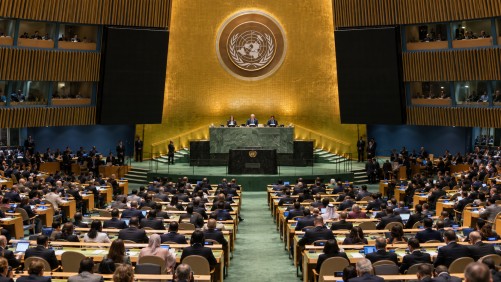
China, along with 27 other countries including Russia, Egypt, and Iran, has called for an end to unilateral coercive measures, asserting that these actions interfere with the sovereignty of nations and undermine multilateral cooperation. During a session at the United Nations General Assembly’s Third Committee, China’s permanent representative to the UN, Fu Cong, highlighted the adverse effects of these measures, stating they contribute to global instability and impose significant economic and humanitarian burdens on developing nations.
The joint statement from these countries emphasized that sanctions, secondary restrictions, and compliance measures exacerbate economic and humanitarian difficulties, posing threats to food, energy, and financial security. The coalition raised concerns about the increasing use of tariffs as a tool for economic pressure, noting that such actions can disrupt international trade and supply chains, hindering affected countries’ efforts to meet the Sustainable Development Goals.
Furthermore, the statement argued that unilateral coercive measures could infringe on fundamental rights, such as access to healthcare, education, and other essential needs. The group urged countries imposing these measures to adhere to the UN Charter and international law, advocating for the lifting of these unilateral actions.
In addition to calling for the end of these measures, the 28 nations appealed to UN members and international organizations to support countries that have been impacted by such restrictions. The plea underscores a collective push for respecting international norms and fostering a cooperative global environment.