
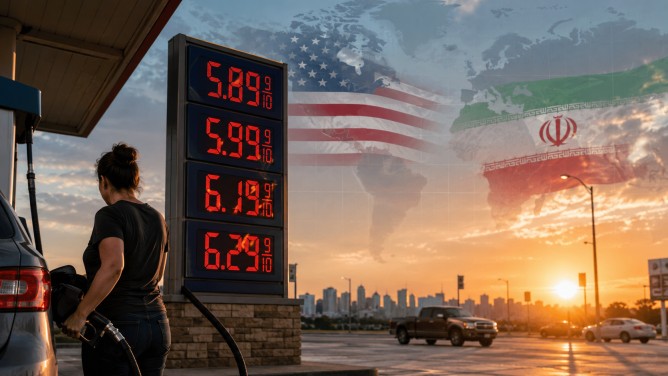
Gasoline prices in the United States have surged to their highest level for the month of August on record, driven by stalled diplomatic negotiations between the U.S. and Iran and mounting tensions in the Strait of Hormuz—an essential corridor for global oil transportation. The national average price for gasoline has climbed to $4.06 per gallon, reflecting an increase of about 5 cents from the previous week and nearly $1 higher than the same period a year ago. States like California and Hawaii are experiencing even steeper prices, with averages nearing $5.50 per gallon.
The upward trajectory in gasoline prices can be traced back to elevated oil prices that have persisted since the onset of the US-Israel conflict with Iran. The disruptions in the Strait of Hormuz have exacerbated the situation, pushing Brent crude prices to as high as $112 per barrel before they slightly receded. Even with this decline, current oil prices continue to outstrip those from a year prior. Initially, gasoline prices saw a temporary decline due to agreements that momentarily eased tensions between the U.S. and Iran, but the stalemate in negotiations has led to renewed price hikes.
This latest increase follows the inability of the U.S. and Iran to come to terms over Iran’s nuclear program within a 60-day negotiation period. Additionally, President Trump’s recent threats against Oman have further fueled concerns over potential regional escalation. These developments have sparked fears of a prolonged conflict, contributing to the upward pressure on energy costs.
Rising fuel prices are adding to the financial burden on American households, which are already grappling with high living expenses. Over the last six months, consumers have reportedly shelled out tens of billions more on gasoline than they would have in the absence of the conflict. Should energy costs remain elevated over an extended timeframe, there is a risk of renewed inflationary pressures impacting the broader economy.