
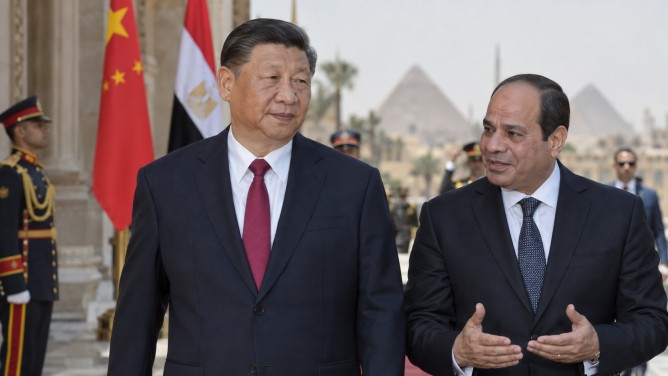
In a significant diplomatic move, Chinese President Xi Jinping has advocated for a novel security framework in the Middle East, emphasizing the importance of cooperation, dialogue, and respect for national sovereignty. This proposal emerged during discussions with Egyptian President Abdel Fattah El-Sisi in Cairo, where Xi outlined a four-point strategy aimed at enhancing regional security cooperation, resolving interlinked conflicts, fostering economic growth, and bolstering international collaboration.
President Xi articulated a vision where countries within the Middle East assume greater responsibility for their own security, firmly opposing external interference. He underscored the pivotal role of the Palestinian issue in addressing broader regional tensions. Furthermore, China expressed readiness to collaborate with Middle Eastern nations on safeguarding international shipping routes, advancing economic development, and tackling the root causes of conflicts. Xi emphasized that the United Nations Charter and international law should continue to serve as the bedrock for addressing regional challenges.
The dialogue between the two leaders also placed considerable emphasis on enhancing economic ties between China and Egypt. President Xi called for increased cooperation in various sectors, including infrastructure, energy, agriculture, communications, electric vehicles, green energy, aerospace, and the digital economy. This focus is rooted in a robust trading relationship, with China having been Egypt’s largest trading partner and source of imports for 14 consecutive years. Notably, bilateral trade between the two nations expanded from $10.21 billion in 2013 to $20.79 billion in 2025.
To solidify their strategic partnership, China and Egypt signed over 20 cooperation agreements encompassing areas such as artificial intelligence, trade, technology, education, transportation, and industrial supply chains. Additionally, the two countries issued a joint statement aimed at further reinforcing their comprehensive strategic partnership. This move signifies a deepening of ties and a mutual commitment to advancing their bilateral relationship in a wide array of sectors.