
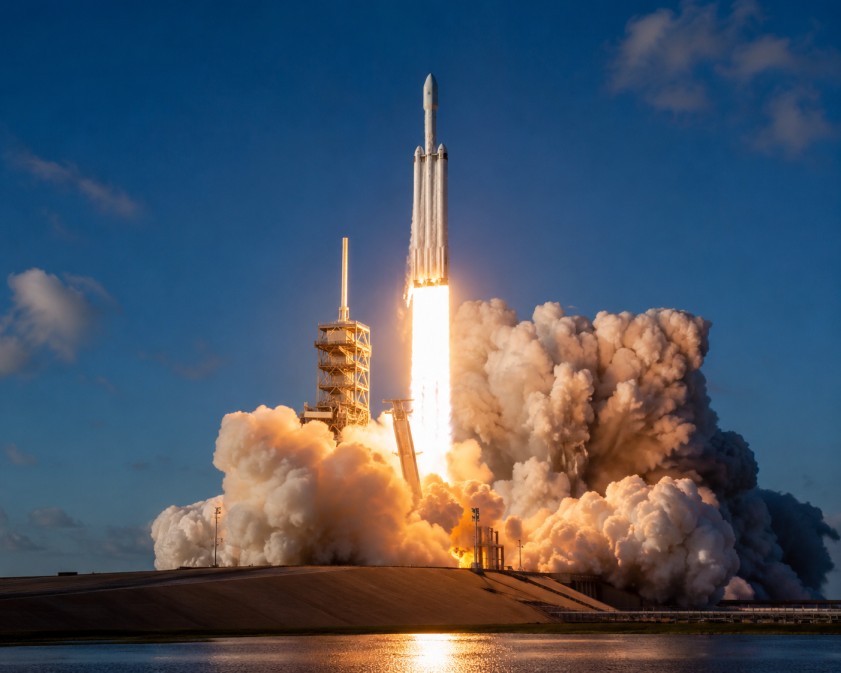
China has marked a significant milestone in its space exploration ambitions with the successful launch of the Shenzhou-23 mission, propelling three astronauts to the Tiangong space station. This mission is a crucial part of China’s strategy to achieve a manned moon landing by the year 2030. The Long March 2-F rocket carried astronauts Lai Ka-ying, Zhu Yangzhu, and Zhang Zhiyuan from the Jiuquan Satellite Launch Center. Notably, this event marks the first instance of a Hong Kong astronaut journeying into space.
In their time aboard the Tiangong station, the crew is set to carry out cutting-edge scientific research across various disciplines such as life sciences, medicine, fluid physics, and materials science. Among the crew, one astronaut will embark on a year-long stay in orbit, setting a new record for China’s human space missions. This prolonged mission aims to investigate the long-term impacts of microgravity, including issues like bone density reduction, muscle atrophy, radiation effects, and psychological stress, thereby paving the way for China’s future missions to the moon and beyond.
Traditionally, China’s Tiangong space station has hosted crews for six-month missions. However, the Shenzhou-23 mission signifies a major advancement towards extended space travel durations. As part of its broader extraterrestrial strategy, Beijing is also developing the Mengzhou spacecraft, foreseen to succeed the current Shenzhou systems and bolster lunar exploration efforts.
China’s commitment to space exploration is further underscored by its plan to initiate the first phase of its International Lunar Research Station by 2035. This initiative follows significant accomplishments, including successfully landing a rover on Mars and deploying a probe on the moon’s far side. Over the past three decades, China has significantly ramped up its investment in space programs, positioning itself as a formidable player in the global space race.