
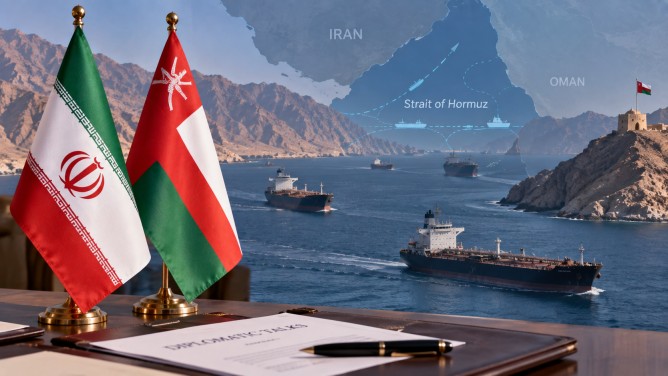
The planned meeting between Iran, Oman, and other Gulf nations to discuss new shipping arrangements through the Strait of Hormuz has been postponed, with no rescheduled date announced. Originally set to occur in Muscat, the meeting aimed to address regional security and an Iran-Oman proposal for managing commercial shipping through this crucial maritime corridor. The postponement, according to Oman’s Foreign Minister Badr Albusaidi, was made to ensure consensus among the involved parties. Iran confirmed that the decision was jointly made with Oman, following requests from several regional countries.
The delay follows an incident where an Iranian commercial vessel was reportedly struck near Qeshm Island, resulting in one fatality and injuries to four crew members. Iranian state media reported that the vessel was hit by a projectile while navigating the Strait of Hormuz, causing a fire and necessitating the evacuation of the crew. Amid these developments, Iran and Oman had been discussing alternative shipping routes through the Strait, proposing that vessels entering the Persian Gulf would travel through Iranian waters, while those exiting would use both Iranian and Omani waters. Iran has emphasized that reopening the Strait would be contingent on meeting its conditions, including potentially imposing fees on vessels for using the proposed routes.
The postponement has occurred in the context of broader diplomatic tensions within the Gulf region. Saudi Arabia has reportedly sought modifications to the Iran-Oman proposal, and Bahrain has announced its decision not to participate in the meeting. The uncertainty surrounding the Strait of Hormuz has contributed to increased oil prices. The Strait is one of the world’s most critical oil shipment routes, and its reduced commercial traffic has become a significant concern for global energy markets.
Further complicating the situation, Saudi Arabia has kept its 1,200-kilometer East-West oil pipeline closed following drone strikes, which limits an alternative route for transporting crude oil to the Red Sea. The prolonged shutdown of this pipeline could jeopardize a substantial portion of global oil supplies, adding to the disruptions caused by the reduced shipping through the Strait of Hormuz. Amid these escalating regional tensions, Brent crude prices have surged above $100 a barrel.