
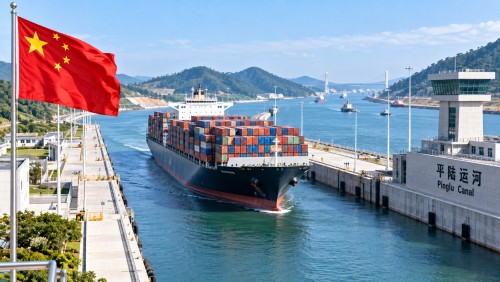
The newly opened Pinglu Canal is set to significantly enhance trade efficiency and economic ties between southwest China and Southeast Asia by providing a shorter and more cost-effective route to the sea. By cutting over 560 kilometers from traditional inland waterway routes, the canal is anticipated to reduce logistics costs by 18% to 30%, saving approximately 5 billion yuan annually in transportation expenses.
Constructed at a cost of 72.7 billion yuan ($10.75 billion), the 134.2-kilometer canal connects Hengzhou in Guangxi Zhuang Autonomous Region with the Beibu Gulf. This development is a crucial part of the New International Land-Sea Trade Corridor, facilitating better access between China’s inland regions and ASEAN markets.
The canal, designed to accommodate vessels up to 5,000 tonnes, presents a new opportunity for businesses in southwest China, which have historically faced higher costs when exporting goods to coastal ports. Commodities such as coal, grain, minerals, new-energy materials, and automobile parts will now reach international markets more efficiently.
Incorporating advanced infrastructure, the canal features three navigation hubs equipped with twin-line ship locks to manage a 65-meter difference in water levels. It also includes eco-friendly measures, such as water-recycling systems expected to conserve over 1 billion cubic meters of water annually, and provisions for wildlife crossings.
With China’s trade with ASEAN surpassing $1 trillion in 2025, and reaching $744.41 billion in the first seven months of 2026, the Pinglu Canal is expected to further strengthen economic connections. The improved route may encourage increased investment and supply-chain integration along its path, enhancing the movement of goods between China and Southeast Asian markets.