
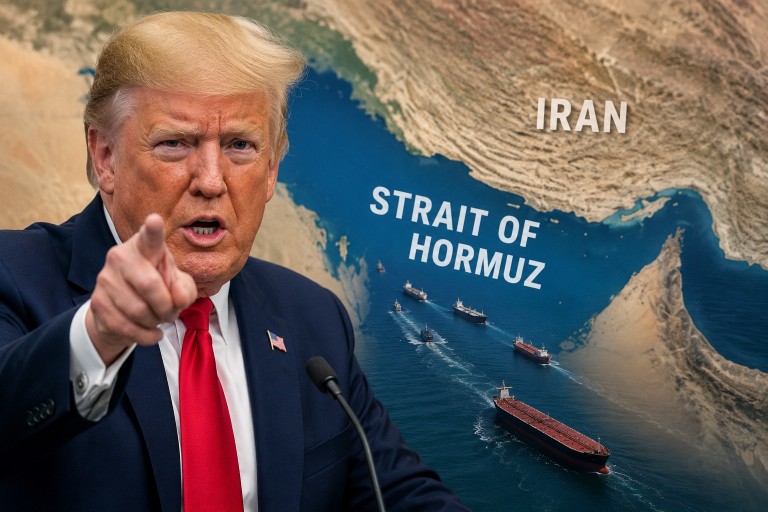
In a significant development amidst ongoing tensions with Iran, US President Donald Trump announced on Friday his intention to declare the Strait of Hormuz as “a territory of the United States.” This declaration comes as Washington continues to grapple with reaching an agreement to end the conflict with Tehran. Speaking in New York, Trump indicated that the decision would be made “pretty soon” following a US victory over Iran, asserting that American forces effectively control the strategic waterway through a blockade.
The Strait of Hormuz is a critical maritime passage, vital to global energy supplies, as it facilitates the transit of approximately one-fifth of the world’s seaborne oil. Situated between Iran and Oman, the strait has faced significant disruptions since military operations by the US and Israel began against Iran. President Trump’s comments have raised questions about whether this represents a formal shift in US policy or serves as a political maneuver.
In response to Trump’s remarks, Iran has firmly rejected the notion of such a US declaration. Deputy Foreign Minister Kazem Gharibabadi made it clear that Tehran would not succumb to US pressure, emphasizing that Iran maintains sovereign authority over the strait’s operational status. Meanwhile, Iranian Foreign Minister Abbas Araqchi stated that Tehran has not yet decided to engage in negotiations with Washington, noting that communication via Qatar and Pakistan does not equate to official dialogue.
Iran has outlined several conditions that need to be met before it will allow the resumption of shipping through the strait. These include demands for compensation for war-related damages, the lifting of economic sanctions, and the unfreezing of Iranian assets. The ongoing standoff has led to increased fuel prices, which President Trump has defended as a necessary measure to prevent Iran from acquiring nuclear weapons.
The persistent conflict over the Strait of Hormuz has heightened global concerns regarding energy supply security and the broader economic repercussions. As the situation develops, the international community closely watches the potential impacts on global markets and geopolitical stability.