
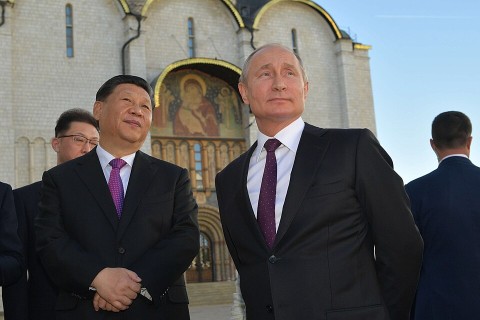
In a notable diplomatic exchange ahead of a significant meeting, Xi Jinping and Vladimir Putin shared “congratulatory letters” as the Russian president prepared to visit Beijing. This event follows closely on the heels of Donald Trump’s departure from China, where he participated in a high-stakes summit. According to reports from Chinese state media, Xi highlighted the deepening and strengthening of bilateral cooperation between China and Russia, marking the 30th anniversary of their strategic partnership this year.
Putin’s visit to China is scheduled for Tuesday evening, with a meeting planned with Xi on Wednesday morning. Kremlin aide Yuri Ushakov revealed that the discussions between the two leaders will cover all facets of bilateral relations, including the proposed Power of Siberia 2 gas pipeline. Analysts have noted the unusual timing of these consecutive visits, emphasizing that hosting the leaders of both the US and Russia within such a short span is rare in the post-Cold War era.
China’s increasingly close ties with Russia have raised concerns in the West, especially following Moscow’s full-scale invasion of Ukraine in 2022. Western diplomats and analysts argue that China’s economic and diplomatic support has been instrumental in sustaining the conflict. The two nations have seen their bilateral trade reach unprecedented levels since 2022, with China purchasing more than a quarter of Russia’s exports, including over $367 billion worth of Russian fossil fuels. This trade has bolstered Moscow’s revenue streams, crucial for its ongoing involvement in Ukraine.
While the US-China discussions last week between Trump and Xi did not heavily focus on the Ukraine conflict or the Sino-Russian relationship, they did address other critical issues such as trade, Taiwan, and the Middle East. Trump noted China’s agreement on reopening the strait of Hormuz, a vital shipping lane affected by the Middle Eastern crisis. Xi, however, expressed concerns over Taiwan, cautioning Trump about the potential for conflict if not handled judiciously. Trump left Beijing undecided on a multibillion-dollar arms deal with Taiwan, a decision that China keenly watches due to its interest in the self-governing island.
Experts like Joseph Webster from the Atlantic Council suggest that Taiwan might be a subtext in the upcoming Xi-Putin meeting. Webster speculates that Beijing could be aiming to secure more fossil fuel agreements with Moscow to fortify its energy supplies in anticipation of any future conflicts. The expansion of Russian oil pipeline capacity to China, such as through the Power of Siberia 2, would significantly enhance Beijing’s energy security, particularly in a scenario involving Taiwan. Russia has been actively encouraging China to advance this pipeline project, which would augment the energy network between the two countries by 50 billion cubic meters.